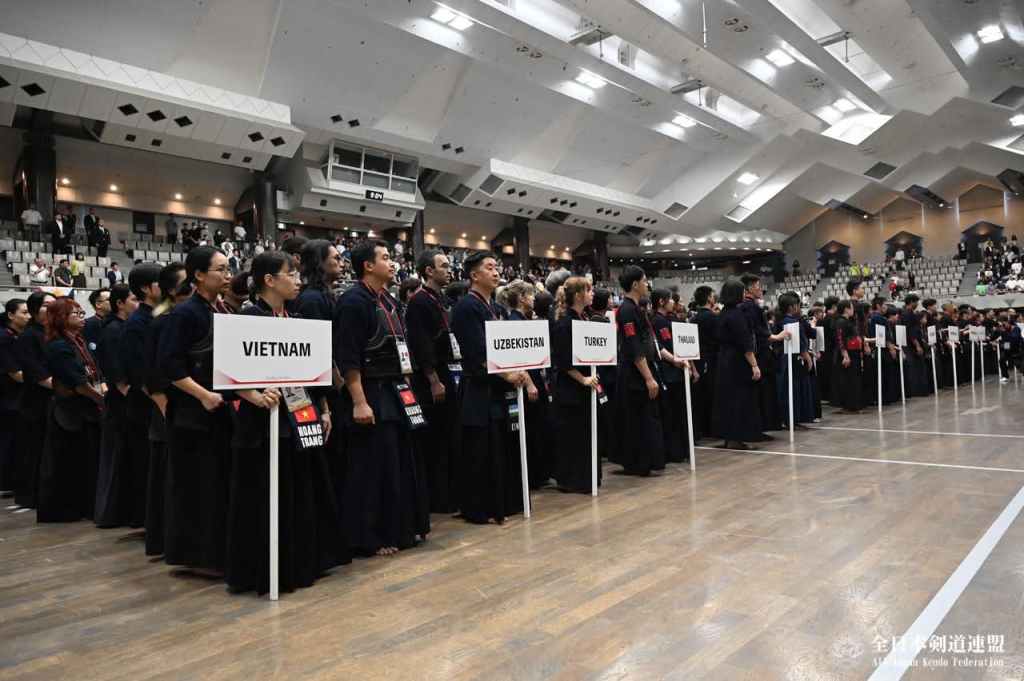
2024-ben hivatalosan is bejelentették az első Ázsiai és Óceániai Kendo Bajnokságot (AOKC), amelyen a Török Nemzeti Kendo Válogatott tagjaként nekem is lehetőségem nyílt részt venni. Az első tornát idén a Tokyo Budokanban rendezték meg, ahol az ázsiai és óceániai régió 22 országából érkeztek versenyzők. A verseny teljes menetrendjét már hónapokkal korábban közzétették a hivatalos weboldalon, hogy minden résztvevő megfelelően fel tudjon készülni.
A verseny felépítése
Az egyéni versenyszámokban országonként két férfi és két női versenyző indulhatott a 3. dan és az alatti kategóriában (Japán és Korea kivételével), valamint további két-két versenyző az open kategóriákban. A versenyt közvetlen kieséses rendszerben bonyolították le, pool szakasz nélkül.
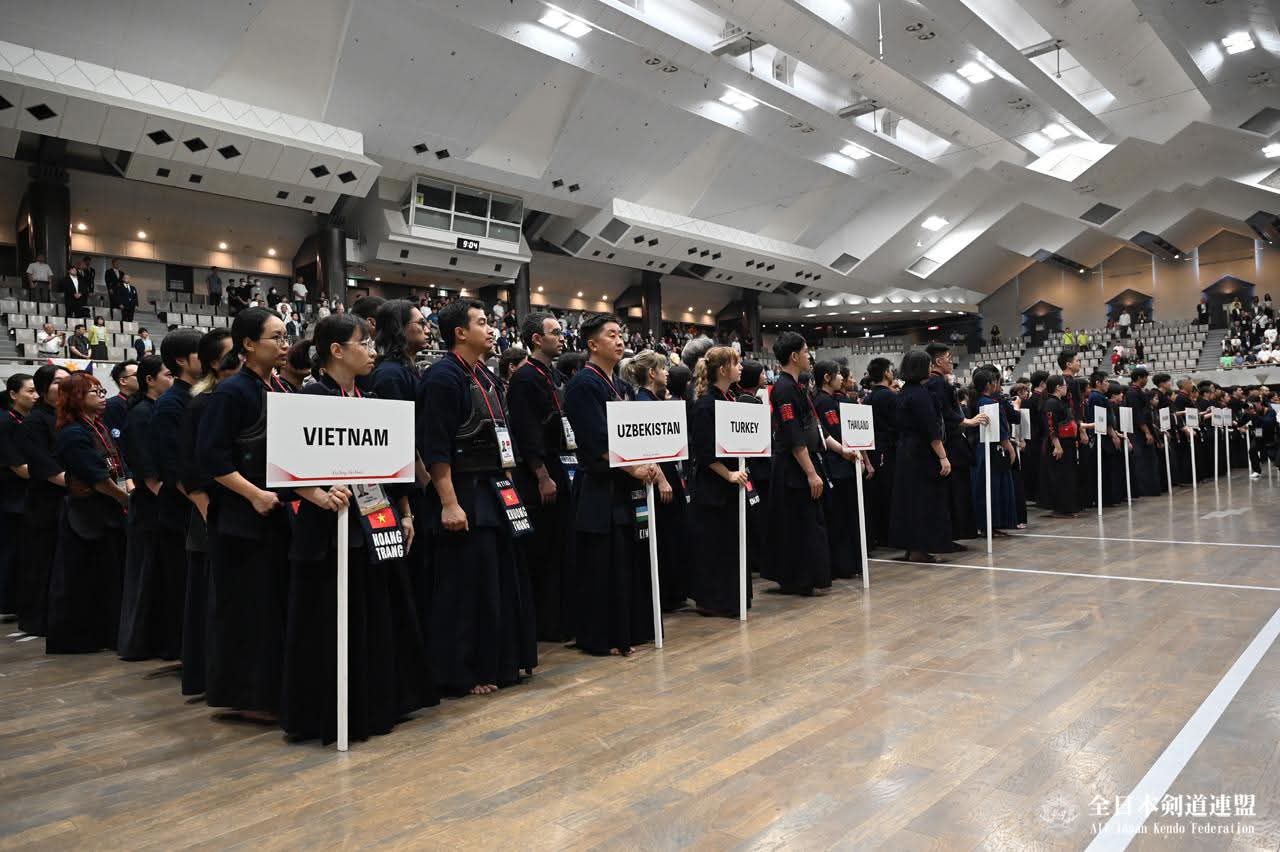
A rendezvény kétnapos volt: az első napon az egyéni, a másodikon a csapatversenyeket rendezték meg. Bár a Tokyo Budokan méretében eltér a Nippon Budokantól, hangulatában semmivel sem marad el mögötte. Már a bejáratnál le kellett vennünk a cipőnket, és egész nap mezítláb közlekedtünk a lelátókon és a csarnokban, még papucsot sem használtunk.
A rendezvény hangulata
Számos 8. danos és magas fokozatú sensei követte figyelemmel az eseményeket shinpan-ként, asztalbíróként vagy nézőként. A WKC-hez képest a részt vevő országok és versenyzők száma jóval alacsonyabb volt. Ez lehetőséget adott sok kisebb kendo nemzet számára, hogy eredményeket érjenek el, és egyúttal megmutassák kendójukat Japánnak is – valamire, amire a WKC hatalmas mezőnyében jóval kevesebb lehetőségük nyílik.
Az EKC-hez hasonlóan itt is kialakult egy közösségi hangulat. Bár Európában az országok földrajzi közelsége miatt a kendósok általában jobban ismerik egymást, Ázsiában és Óceániában ez az esemény segíthet áthidalni ezeket a távolságokat. A kisebb létszámnak köszönhetően olyan országok versenyzőivel is lehetőség nyílt közelebbi kapcsolatot kialakítani, akikkel egy WKC-n talán soha nem találkoznánk.
Összességében rendkívül barátságos és támogató légkör uralkodott. A versenyek alatt és a sayonara partin is gyakran lehetett hallani, ahogy a résztvevők egymás kendóját dicsérik.
Saját versenyem
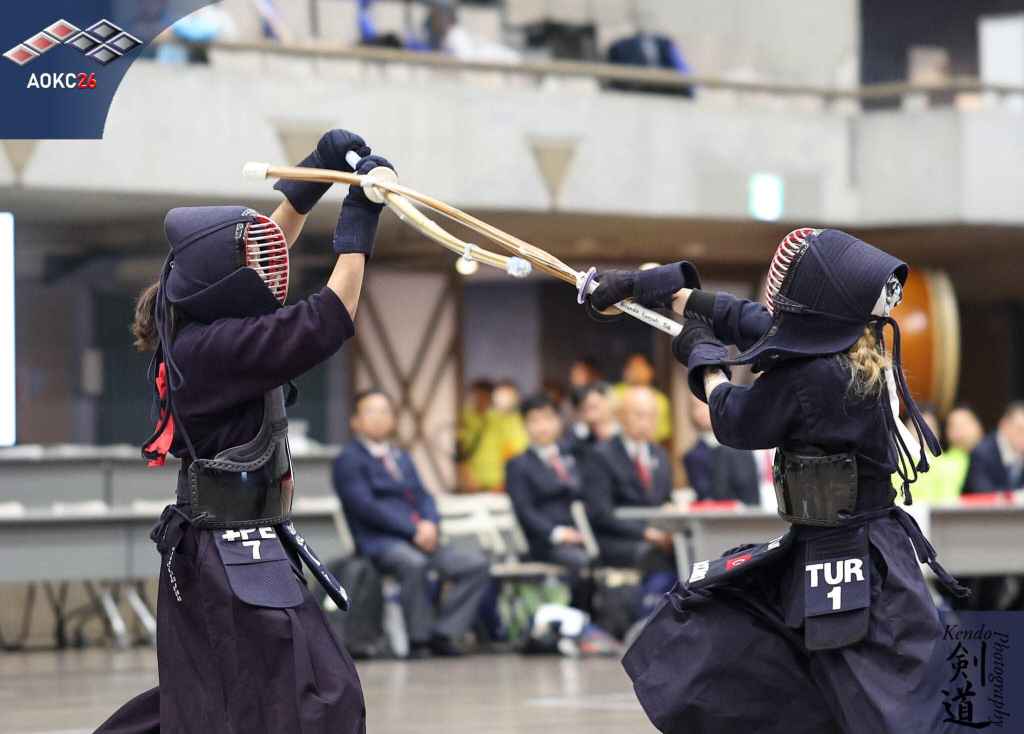
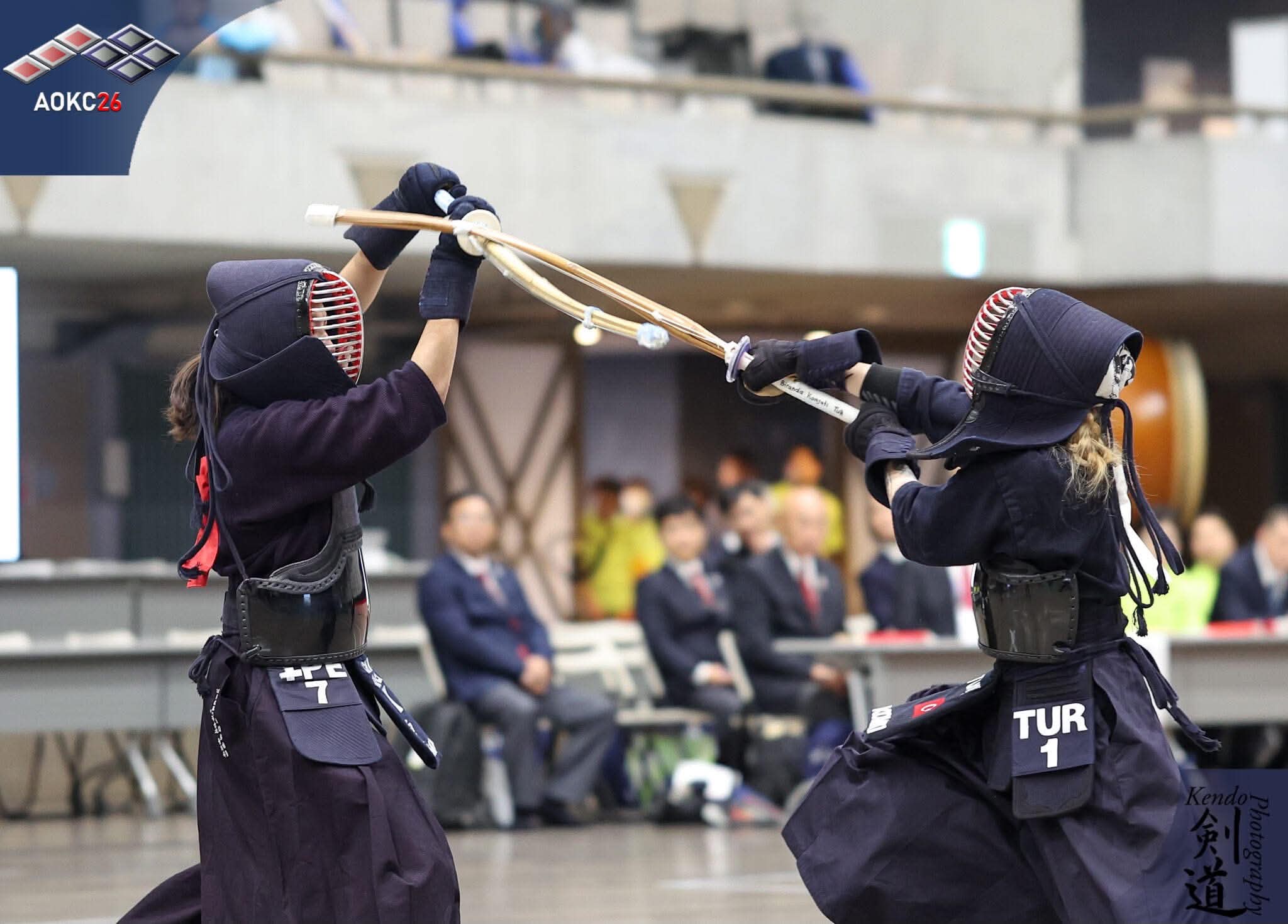
Az első napon megrendezett egyéni versenyen a 3. dan és az alatti kategóriában indultam. Hongkongi, kínai és ausztrál ellenfeleimet legyőzve jutottam az elődöntőbe, ahol végül egy szoros mérkőzésen 1–0 arányban vereséget szenvedtem attól a Chinese Taipei versenyzőtől, aki később a kategória bajnoka lett.
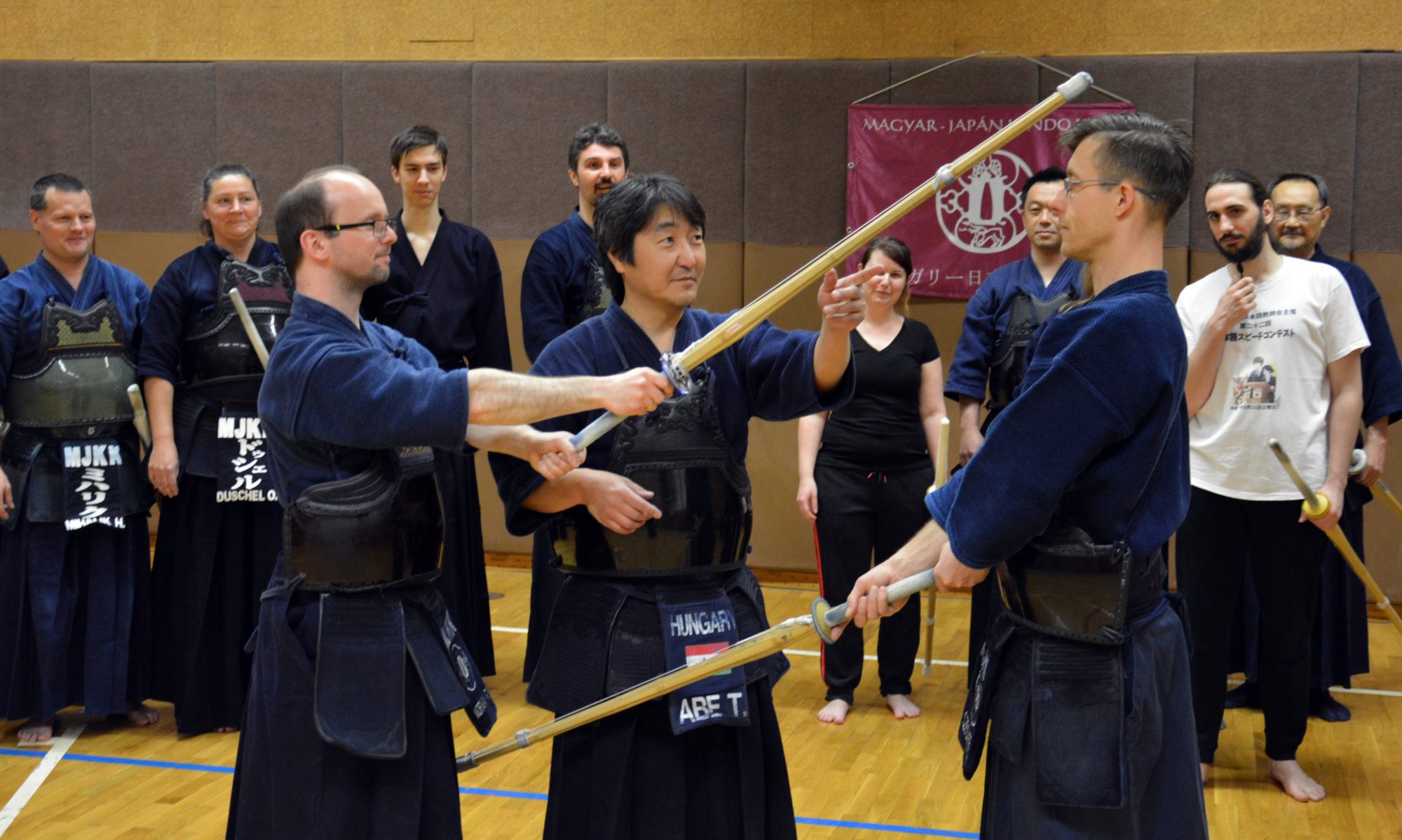
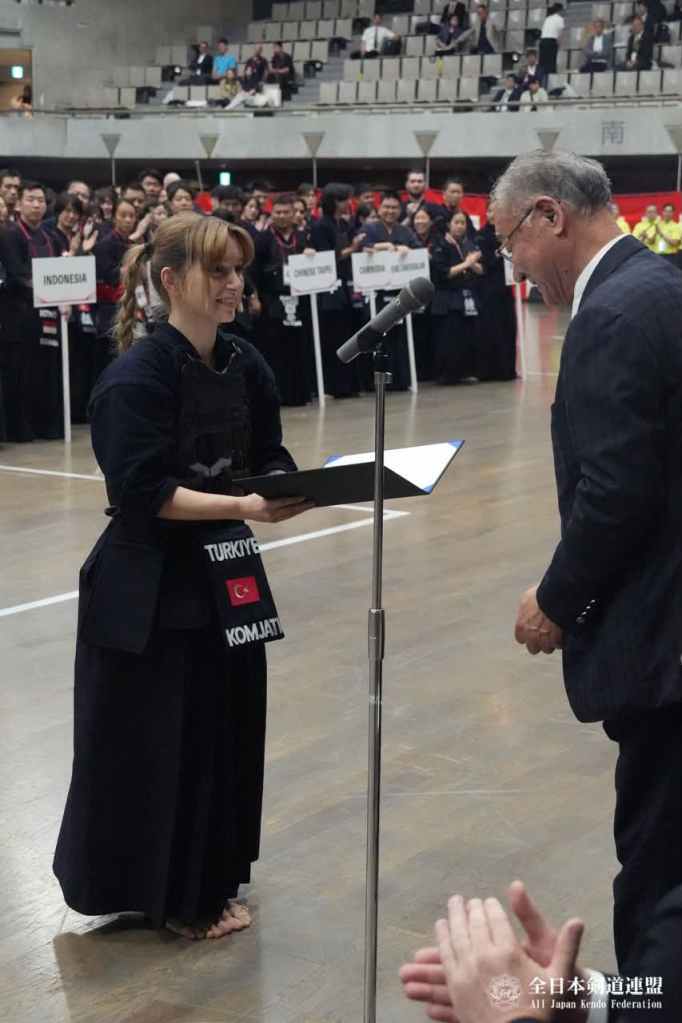
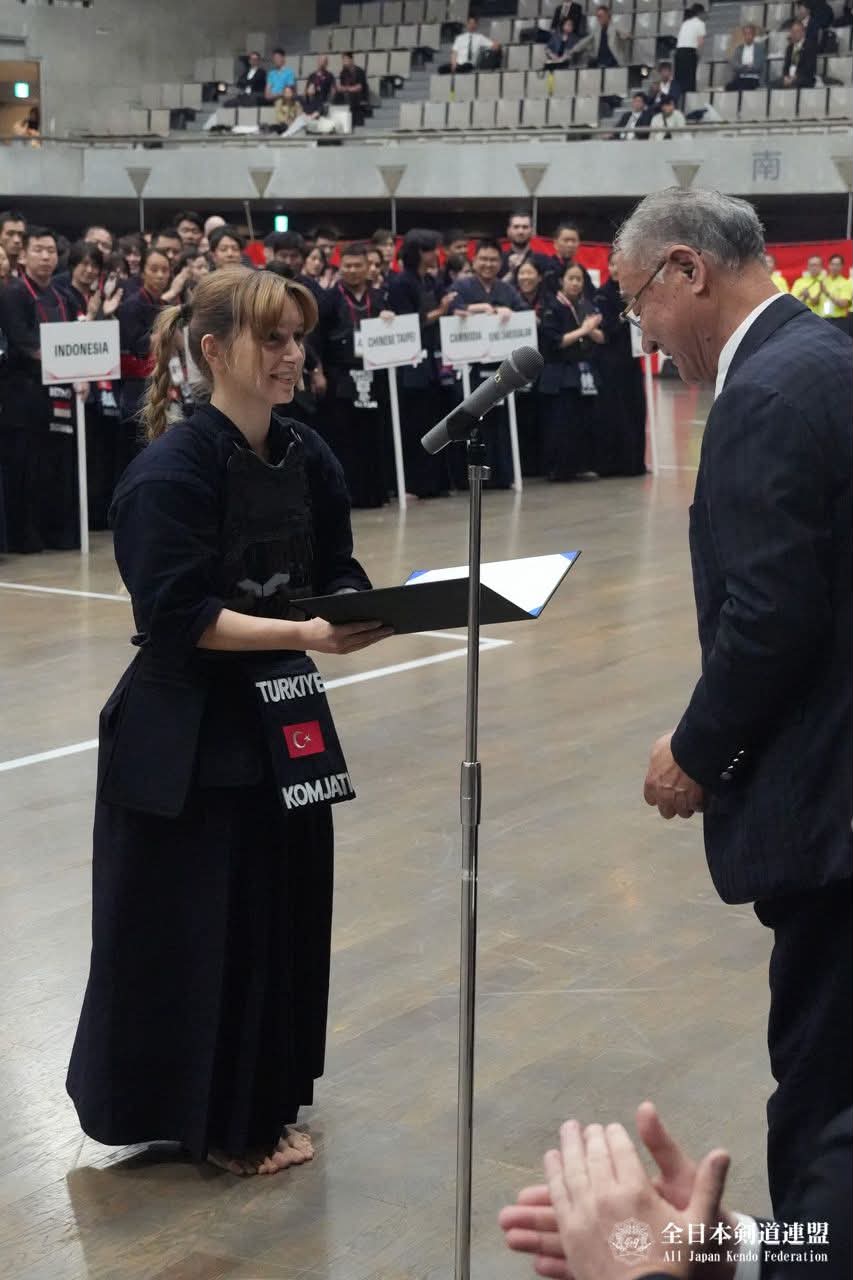
Különösen nagy megtiszteltetés volt számomra, hogy a díjamat Makita Sensei, az AOKC jelenlegi elnöke adta át. Ő egyben annak az Abe Senseinek az egyetemi mestere is, aki az MJKK dojót vezeti, amelynek én is tagja vagyok.
Bíráskodás és ipponok
A bíráskodás terén leginkább az tűnt fel, hogy amikor a versenyzők közel kerültek a shiai-jō széléhez, vagy lökdösődés alakult ki közöttük, a shinpanok gyakran még azelőtt megállították a mérkőzést, hogy valódi kilépés történt volna. Ennek következtében nagyon kevés hansoku született a páston kívülre lépés miatt.
Ezzel szemben gyakran adtak hansoku-t helytelen tsubazeriai miatt, például amikor az ököl túl magasra került, vagy amikor a shinait az ellenfél arcába nyomták. Az elválás szabályait is következetesen betartatták.
Saját benyomásom szerint az ipponok megítélése erősen a megfelelő szituáció kialakítására épült. A legtöbb pontot azok a támadások kapták, amelyeknél a versenyző valódi seme-vel hibára kényszerítette ellenfelét, majd kihasználta a keletkező nyitást. Többször előfordult, hogy a shinpanok megvárták a zanshin teljes és helyes befejezését, mielőtt megadták volna az ippon-t.
A szervezés
A szervezés rendkívül magas színvonalú volt. A megnyitó ünnepség egy fiatal, ismert operaénekes előadásával kezdődött, aki elénekelte a japán himnuszt. Ezt követően egy iaidó-bemutató, majd egy taiko előadás emelte tovább az esemény hangulatát.
A pálya minősége, a jól elkülönített shiai-jōk, a kiváló élő közvetítés, valamint az igényesen elkészített érmek és oklevelek mind hozzájárultak a rendezvény színvonalához.
A tornának saját kabalafigurája is volt, amelynek motívuma különböző ajándéktárgyakon – például tenugui-kon – is megjelent. Ezeket a résztvevők emlékként megvásárolhatták. Még a bentók is rendkívül gondosan voltak elkészítve.
A szervezők bejelentették, hogy az AOKC-t háromévente rendezik meg, és a második eseménynek 2029-ben Korea ad majd otthont.
Felkészülés és japán keikók
Másfél héttel a torna előtt érkeztem Japánba. Elsőként lehetőségem nyílt részt venni egy keikón a Tsukuba Egyetemen, (ahol korábban Abe Sensei is tanult) – Nabeyama Sensei dojójában. Bár időhiány miatt nem tudtam jigeikózni a 8. danos bajnok Nabeyama Sensei-el, közösen edzhettem és jigeikózhattam az egyetem rendkívül erős és népes női csapatának tagjaival.
A verseny hetében két egymást követő napon is részt vehettem a Tokyo Police dojo reggeli edzésein. Először a 7 és 8 óra között tartott asa-geikón, majd az azt követő, délig tartó edzésen. Ezek jelentették számomra a legnagyobb kihívást.
A korai kezdés, a hosszú időtartam, valamint a hatalmas mennyiségű kirikaeshi és suburi rendkívül megterhelő volt. Hálás vagyok, hogy Shode senpai idei edzései részben felkészítettek erre, mert nélkülük nehezen tudtam volna végigcsinálni ezeket a keikókat.
Az egyetemi dojohoz képest itt kevesebb női kendós volt jelen, így időnként férfiakkal is lehetőségem nyílt jigeikózni. Bár az edzés rendkívül intenzív volt, a japán kendósok még a nap végén következő kakarigeiko során sem hagytak ki egyetlen találatot sem, és végig tökéletes formát tartottak.
A nap végén rendszeresen 10 perc kakarigeiko, 10 perc kirikaeshi és 10 perc ai-kirikaeshi következett, egyperces blokkokban váltva. Ezt követte boguban 100 gyors haya-suburi. Mire idáig eljutottunk, a karjaim már alig mozdultak.
Ekkor értettem meg igazán, hogy még nagyon hosszú út áll előttem ahhoz, hogy felvehessem a versenyt azokkal a japán kendósokkal, akik minden egyes nap ilyen intenzitású edzéseket végeznek.
Végül lehetőségünk volt egy shiai próbát is tartani a Keio Egyetem dojójában. A verseny előtti napon pedig a Budokanban megtartott bemelegítő edzéssel lezártuk a felkészülést, és készen álltunk a tornára.
🥉 Biranda a versenyen a III. helyen végzett. Ezúton is szívből gratulálunk! 🎉
Biranda Komjáti: The First Asian and Oceanian Kendo Championships (AOKC) – A Competitor’s Perspective
In 2024, the firstAsian and Oceanian Kendo Championships (AOKC) were officially announced, and as a member of the Turkish National Kendo Team, I was fortunate enough to take part in this historic event. The first championship was held this year at the Tokyo Budokan, bringing together participants from 22 countries across Asia and Oceania. The complete tournament schedule had been published months in advance on the official website, allowing competitors ample time to prepare.
Competition Format
In the individual events, each country was allowed to enter two male and two female competitors in the 3rd Dan and below category (with the exception of Japan and Korea), as well as two male and two female competitors in the open divisions. The tournament was conducted as a direct knockout competition without a preliminary pool stage.
The event lasted two days: individual competitions were held on the first day, while team events took place on the second. Although the Tokyo Budokan differs from the Nippon Budokan in size, it is every bit its equal in atmosphere. Upon entering the venue, we were required to remove our shoes and spent the entire day barefoot throughout the stands and the arena, without even wearing slippers.
The Atmosphere of the Event
Many high-ranking sensei, including numerous 8th Dan instructors, attended the event as referees, table officials, or spectators. Compared to the World Kendo Championships (WKC), the number of participating countries and competitors was significantly smaller. This provided many developing kendo nations with an opportunity not only to achieve notable results but also to showcase their kendo to Japan—something that can be much more difficult amid the scale and intensity of a WKC.
Much like the European Kendo Championships (EKC), the event fostered a strong sense of community. While European kendoka often know one another through geographical proximity and frequent encounters, an event like the AOKC has the potential to bridge similar distances across Asia and Oceania. Thanks to the smaller scale of the tournament, it was possible to build meaningful connections with competitors from countries whom we might never meet at a WKC.
Overall, the atmosphere was exceptionally friendly and supportive. During both the competition and the sayonara party, it was common to hear participants praising one another’s kendo.
My Competition
I competed in the 3rd Dan and below individual division on the first day. After defeating opponents from Hong Kong, China, and Australia, I advanced to the semifinals, where I narrowly lost 1–0 to a competitor from Chinese Taipei, who ultimately went on to win the division.
It was a particular honor for me to receive my award from Makita Sensei, the current President of the AOKC. He also happens to be the former university teacher of Abe Sensei, who instructs at the MJKK dojo, of which I am a member.
Refereeing and Ippon Judgement
One aspect of the refereeing that stood out was how proactively the shinpan managed situations near the boundaries of the shiai-jō. When competitors approached the edge of the court or became involved in pushing exchanges, referees often stopped the match before an actual step-out occurred. As a result, very few hansoku penalties were issued for leaving the court.
By contrast, penalties for improper tsubazeriai were relatively common. Hansoku were frequently given when competitors raised their fists excessively high or pushed their shinai into the opponent’s face. The rules governing separation from tsubazeriai were also enforced consistently.
From my perspective, the awarding of ippon relied heavily on the quality of the situation leading up to the strike. Most successful scoring techniques came from genuine seme that forced an error or reaction from the opponent and created a clear opening. On several occasions, the referees waited until zanshin had been fully and properly completed before awarding ippon.
Organization
The organization of the event was outstanding. The opening ceremony began with a performance of the Japanese national anthem by a young and well-known opera singer. This was followed by an iaido demonstration and later a taiko performance, both of which further elevated the atmosphere.
The quality of the flooring, the clearly separated shiai-jō, the excellent live-stream production, and the beautifully designed medals and certificates all contributed to the high standard of the event.
The championship even had its own mascot character, whose design appeared on various commemorative items, including tenugui that participants could purchase as souvenirs. Even the bento lunches were prepared with remarkable care and attention to detail.
It was also announced that the AOKC will be held every three years, with the second championship scheduled to take place in Korea in 2029.
Preparation and Training in Japan
I arrived in Japan one and a half weeks before the tournament. My first opportunity was to participate in a keiko session at the University of Tsukuba, (where Abe Sensei had also trained in the past) – in Nabeyama Sensei’s dojo. Although time constraints prevented me from doing jigeiko with Nabeyama Sensei himself—an 8th Dan champion — I was able to train and practice jigeiko with members of the university’s exceptionally strong and numerous women’s team.
During the week of the tournament, I attended morning practice sessions at the Tokyo Metropolitan Police dojo on two consecutive days. First came the asa-geiko from 7:00 to 8:00 a.m., followed immediately by a second training session that continued until noon. These practices represented the greatest challenge of my entire trip.
The early start, the long duration, and the enormous volume of kirikaeshi and suburi were extremely demanding. I am grateful that this year’s training under Shode Senpai had prepared me, at least in part, for the experience. Without that preparation, I cannot imagine having completed these keiko sessions.
Compared to the university dojo, there were fewer female kendoka present, which allowed me occasional opportunities to do jigeiko with male practitioners as well. Despite the intensity of the training, the Japanese kendoka never appeared to slow down. Even during the final kakarigeiko sessions, they executed every strike with precision while maintaining impeccable form throughout.
At the end of the day, training routinely concluded with ten minutes each of kakarigeiko, kirikaeshi, and ai-kirikaeshi, rotating in one-minute intervals. This was followed by one hundred rapid haya-suburi in bogu. By that point, my arms could barely move.
It was then that I truly understood how long the road ahead remains if I wish to compete on equal terms with Japanese kendoka who train at this level every single day.
Finally, we had the opportunity to conduct a shiai rehearsal at Keio University’s dojo. On the day before the tournament, we concluded our preparations with the official warm-up practice held at the Budokan and stood ready for the championship to begin.
🥉 Biranda earned a bronze medal and finished in 3rd place at the tournament. Congratulations from all of us on this fantastic achievement! 🎉
 Magyar-Japán Kendó Klub